
Updated May 5, 2026
Note to self: when waiting until the last minute to heavily pack 8 days worth of food, water, and equipment to survive in the wilderness… don’t forget your shoes!
Oh no, 4 hours into the drive Brad looks down at his feet wrapped in his rainbows (that’s a summer sandal for you non-LA types) and quickly realizes that this and his Converse was all he remembered to bring. Now he could live without extra socks, his better half brought extra. He could also borrow toothpaste, a shirt, bandana, snacks, fuel, a hat, a knife, even a headlamp if he had to. But hiking through wilderness terrain without a good pair of hiking boots is just asking for trouble. Alas, after a 2-hour detour to the nearest REI, a receipt for a full-price purchase, and some Advil for my headache, we arrived safely to our motel in Joseph, OR to check in. We obviously missed happy hour because the office staff of one was clearly on his 3 plus glass of boxed wine! We checked into the “fisherman’s room” with walls adorned in all matters pertaining to this sport, a bed with grandma’s quilt made out of fishy looking materials, and plenty of hot water!
We dined at a local eatery called the Stubborn Mule that was serving surf and turf for two as their Friday night special (we ate the turf and not the surf), and called it a day. I’m sure we went to sleep by going down our gear list over and over again in our minds because now we were paranoid we’d forgotten something important.
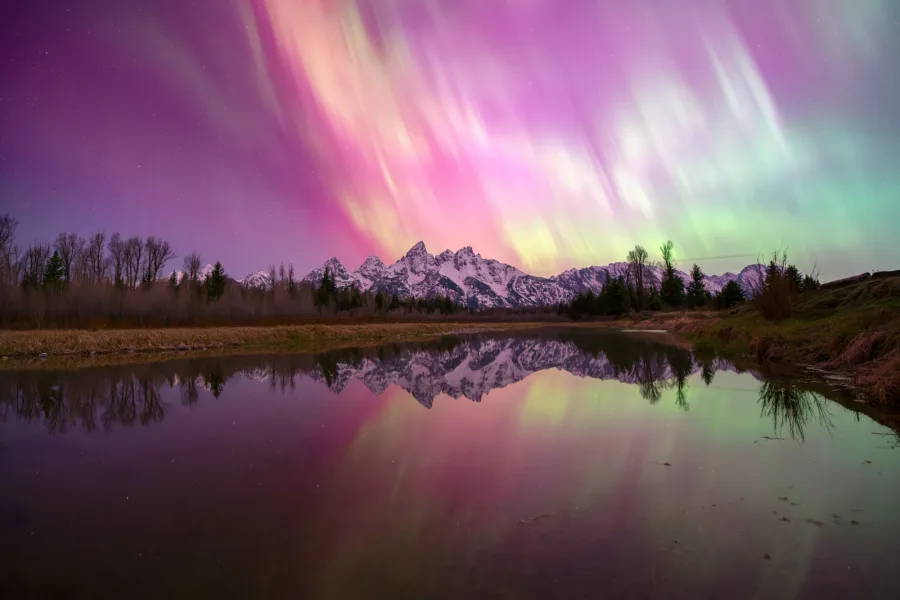
Aurora Borealis from Eagle Cap Wilderness
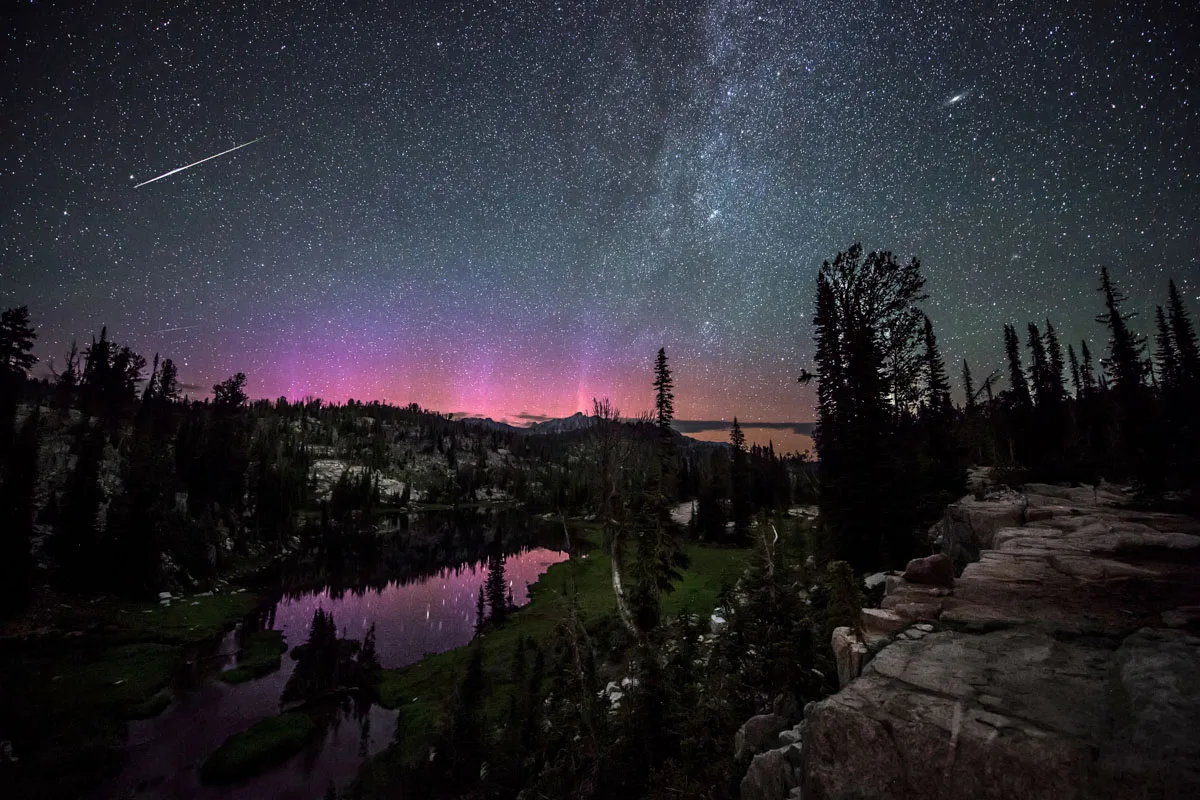
The next morning we ate a hearty breakfast among tourists and the local folk playing gin rummy, and headed to the trail head. With heavy packs already making our joints ache, we began the uphill climb to Alpine country. The trail is shared with horses; so unfortunately, most of the trip was hiking through and around hot steaming horse poop. After a 6 ½ -mile climb the best part of the day was taking off our shoes and fording an icy river to our well-hidden campsite. We try our best to camp away from the trail and other hikers because part of the fun is just disappearing together. By hiker midnight (8pm) and with bellies full of re-hydrated, dehydrated food, we fell fast asleep. Animal sightings today counted 9 (sheep, cows, horses, goats, a hawk, antelope, donkey, deer, and road kill raccoon).
The next day was more uphill in the form of switchbacks, but we got an earlier start to climb in the cool of the day. We passed some parents looking for their 2 kids and remembered hearing some laughter from young sounding voices about an hour prior. This info seemed to calm mom down a bit, a great example of always being aware of your surroundings-you just never know how useful you may become during someone’s crisis. We trekked about 9 miles today, climbing higher and higher around switchbacks, streams, and alpine lakes. The air down below was hazy with smoke from summer fires, but the air cleaned out at higher altitudes. It’s always comforting to know you have plenty of water sources near. The nice thing about getting to higher elevations is that there are less people and more views.
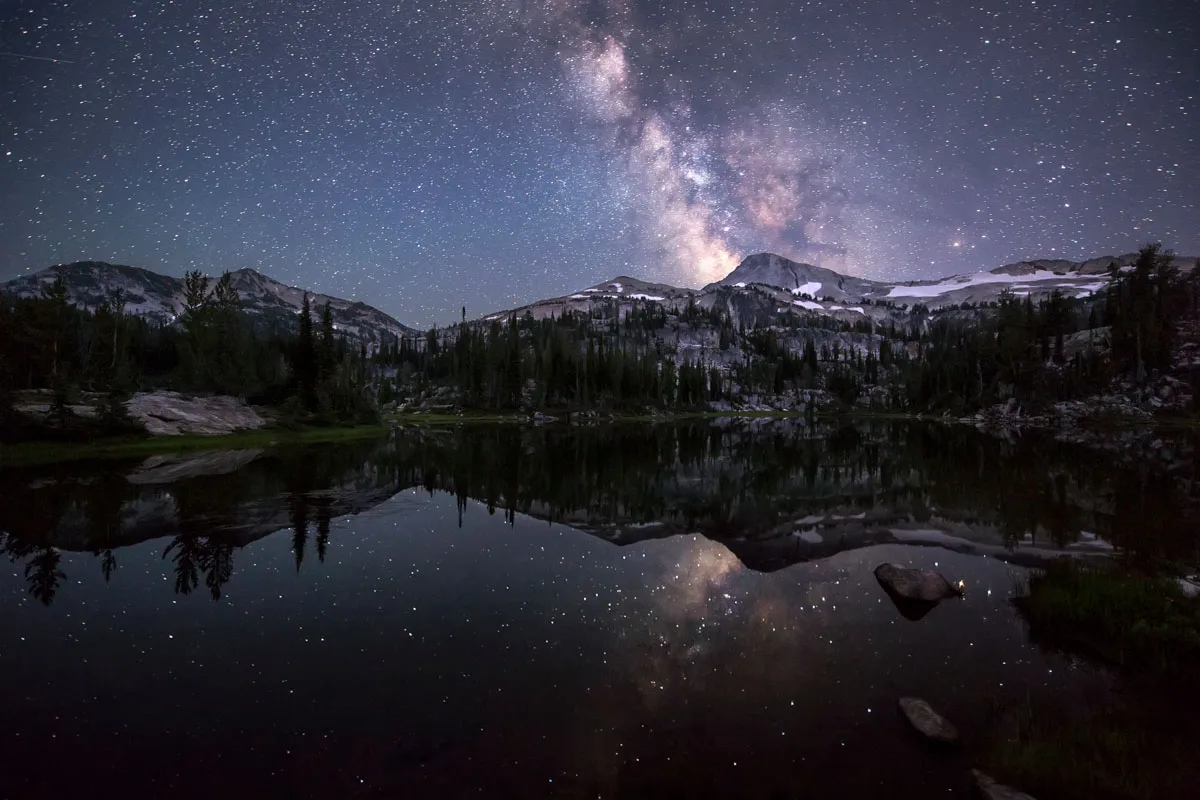
Moccasin Lake in Eagle Cap Wilderness
We finally arrived at Moccasin Lake and started to scout out a camp site. We found a beautiful spot overlooking a natural water cascade and views of the lake. The first order of business was to set up camp, eat, and then take a bath in the frigid waters of a shallow pool area of the inlet. No time to be shy or lounge in the snow melt. Body parts go numb fast and if you wash your hair, brain freeze is instant. It’s painful while you’re doing it, but afterwards, your body feels alive and refreshed. The rest of the day was spent sunbathing on a warm rock with a good book, and Brad rested up and scouted out his path for some night sky photographing. We took a zero day here (a day where we do no hiking) to enjoy the solitude, rest after a night of shooting, wonder and explore, and oh yes, I accepted a marriage proposal. Aaaahhh yes, just another glorious day in the woods!
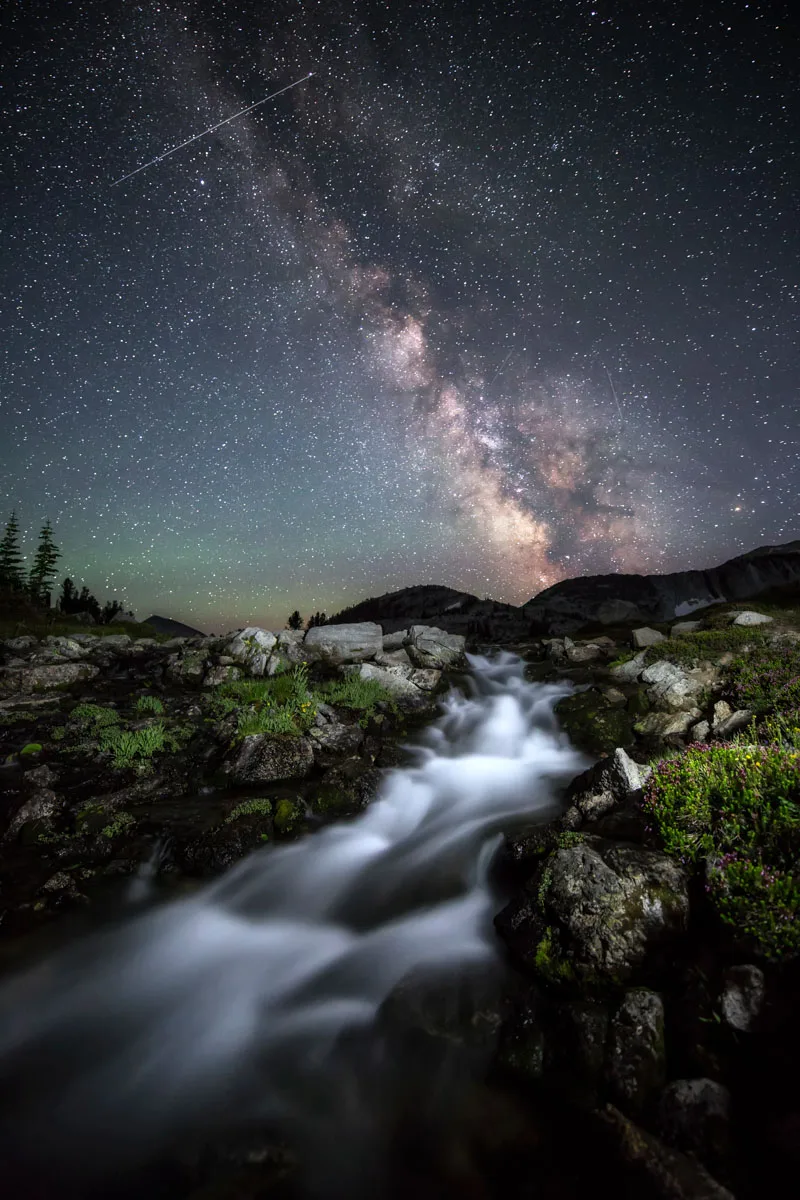
Photographing the Milky Way from Glacier Lake
Our next destination was Glacier Lake, just 3 miles away, but over a gnarly pass of granite rock lit by the sun. It’s very easy to get sunburned on terrain like this because the sun reflects back onto you from the granite in all directions. Sometimes, the inside of your nose, your kneecaps, even the roof of your mouth can burn when you least expect it!
By this time, our feet were getting pretty tore up. We had to wrap heels and toes with moleskin, athletes tape, and band aides (remember, Brad’s shoes were not worn in) to get to our highest point of the trip. No horse poop up here, only ice capped solid granite rocks towering up to the sky, clear blue fresh snow melt from rushing falls, wildflowers blooming in yellows, oranges, reds, purples, and whites, a cool breeze to keep the mosquitoes away…and perfect calm.
The day before, we had a visit from Ranger Rick checking out our site for campfires and verifying our permits. He even grilled us on the rules of the area, like leave no trace practices, camping 100 feet from a water source, and safety precautions. We passed with flying colors so he shared the best spots around Glacier Lake for privacy and views. He did not disappoint. Our site overlooked the entire lake and towering mountains, and had a rock kitchen area complete with chairs made of stone.
We did however have to share the site with a couple of very interested picas that we call Snickers. We call them this because they always seem to go for our candy bar wrappers during their missions to steal our food. The little thieves don’t even bother to sneak around in reconnaissance; they will blatantly crawl onto your lap and steal the food right out of your hand if given the chance. Highway Robbery!
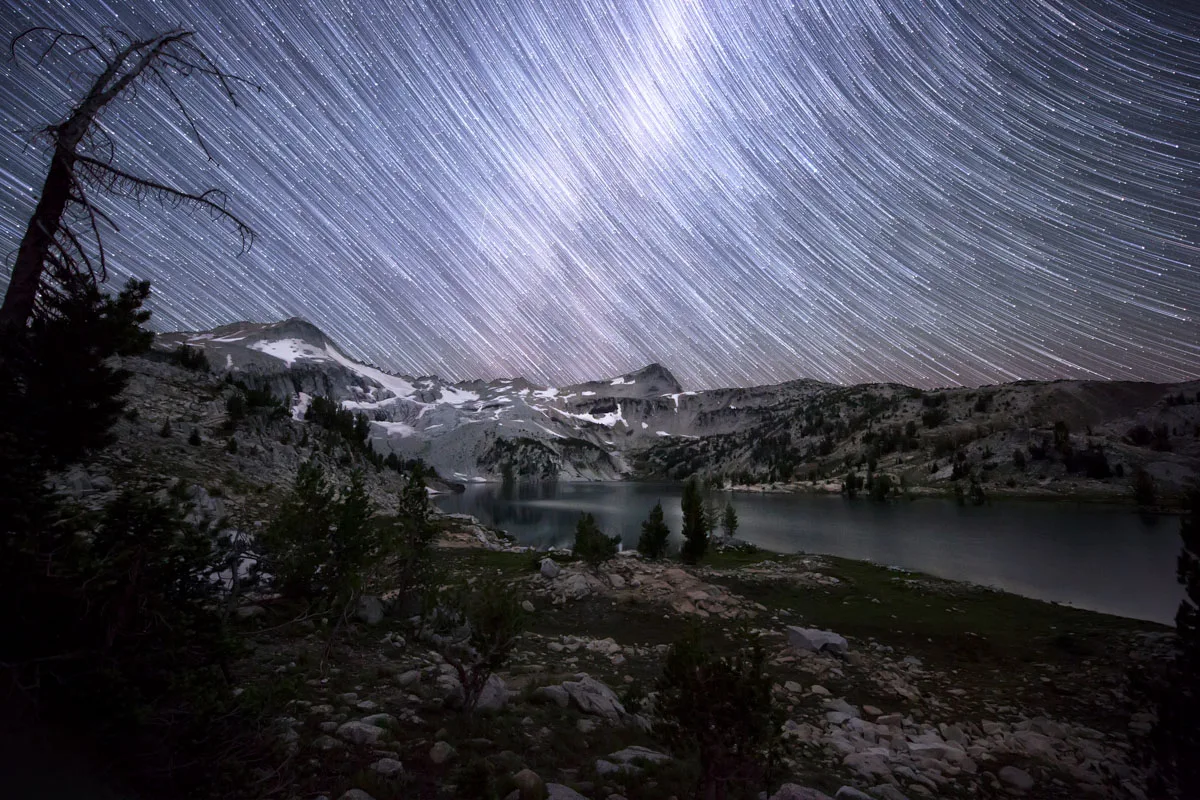
Having left societal pressures behind, we spent a couple of days enjoying the serenity and Brad spent his nights capturing images of the Milky Way and meteors from dark and clear alpine skies. The dark heavens sparkled with such crisp clarity; it seemed I could clutch the diamonds from where we lay. This is why we are such advocates of preserving our night skies and educating you about the effects of light pollution.

Believe it or not, this is how we like to spend our vacation time. Hiking countless miles in high elevations gives us time to enjoy each other in deep conversation, admire blooming wildflowers, and witness clear, dark skies from our tent perched high on mountain tops. We did however, return with a few battle scars from blood thirsty mosquitos, intense sunshine, and blistered feet. In addition, we were starving for fresh produce (and a big fat cheeseburger) after eating only freeze-dried food for a week. Why do we do it you may ask? Because immersing ourselves in pristine nature heals our souls. No noise pollution, TV, cell phones, emails, or deadlines gave us plenty of time to just enjoy every moment to moment as living murals unfolded or animal entertained us. Each natural gift revived us and reminds us why we love to disappear into the wilderness.
These were the darkest skies in Oregon!
We heard Eagle Cap had some of the darkest skies in Oregon, and of course, we just had to see for ourselves. The night sky was so intensely clear and dark; it must have been a ‘Class 2’ on the ‘The Bortle Dark-Sky Scale’ (Visit for more info on the Bortle Scale). Because the darkness was so deep; it was difficult capturing the vastness and beauty of the high altitude landscape. Therefore, Brad concentrated on shooting during the ‘Nautical Twilight’. Nautical Twilight is the time when the center of the sun is 12 degrees below the horizon, and only general or vague outlines of the horizon are visible. Brad calls it his “Blue Hour”, which provides him just enough light to capture most of the visual elements of the landscape.
Fortunately, it was mostly downhill through sloping fields of wild flowers, waterfalls, and poop-less dirt trails for our 2-day trek back to civilization. Wildlife we can add to the list includes frogs, grasshoppers, black squirrels, fish, and marmots. These are little critters that remind us to respect our forests and to remain thankful that we still have pristine places to reconnect and rejuvenate the soul.
If you’re interested in learning more about backpacking in wilderness areas, far away from city lights, and photographing the night, check out our current workshops here: Night Photography Workshops






6 Responses
I have been reflecting all day on how you have blossomed into an exquisite photographer. One thought…some say the sky is the limit, but apparently limitless for you!
Brad, your amazing brilliance in capturing the sky and wilderness is heartfelt and inspiring. You are the sweet night-stalker of photography! Marci, the stories have me right there with you enjoying the solitude and adventures. Congrats on the engagement. Always my best to you two!
Great images of the night sky. Is it possible to list the EXIF info to help others such as myself hone in on our techniques? You’ve got some wonderful images. Very inspirational for astrophoto newbies such as myself. All the best. Cheers!
Great story. I know exactly how you feel about hiking and they way it recharges you. Congratulations on you engagement.
Congrats on your engagement! We are so very happy for the both of you!
Love the latest photos, too!
Regards,
Jim & Karen
Thanks Jim & Karen! We really appreciate it!