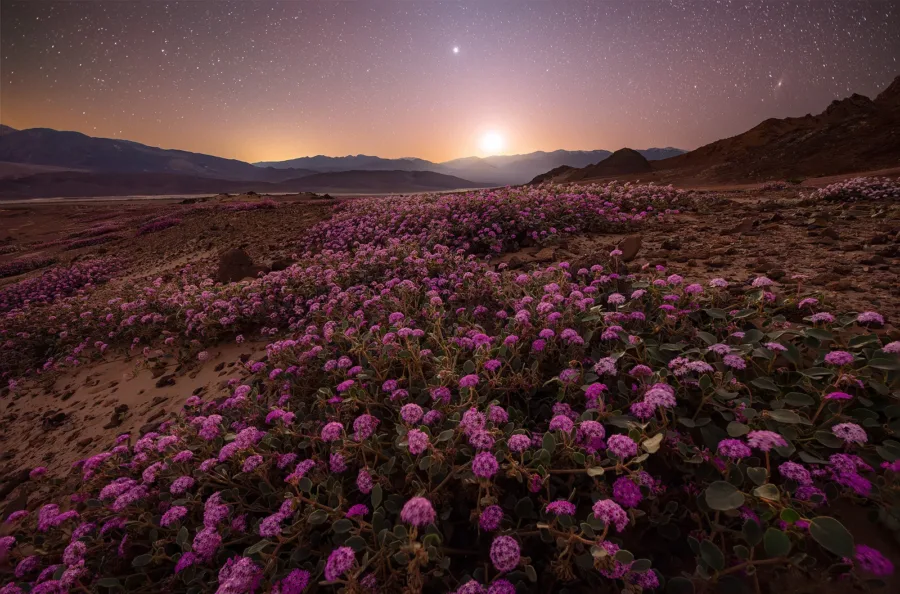
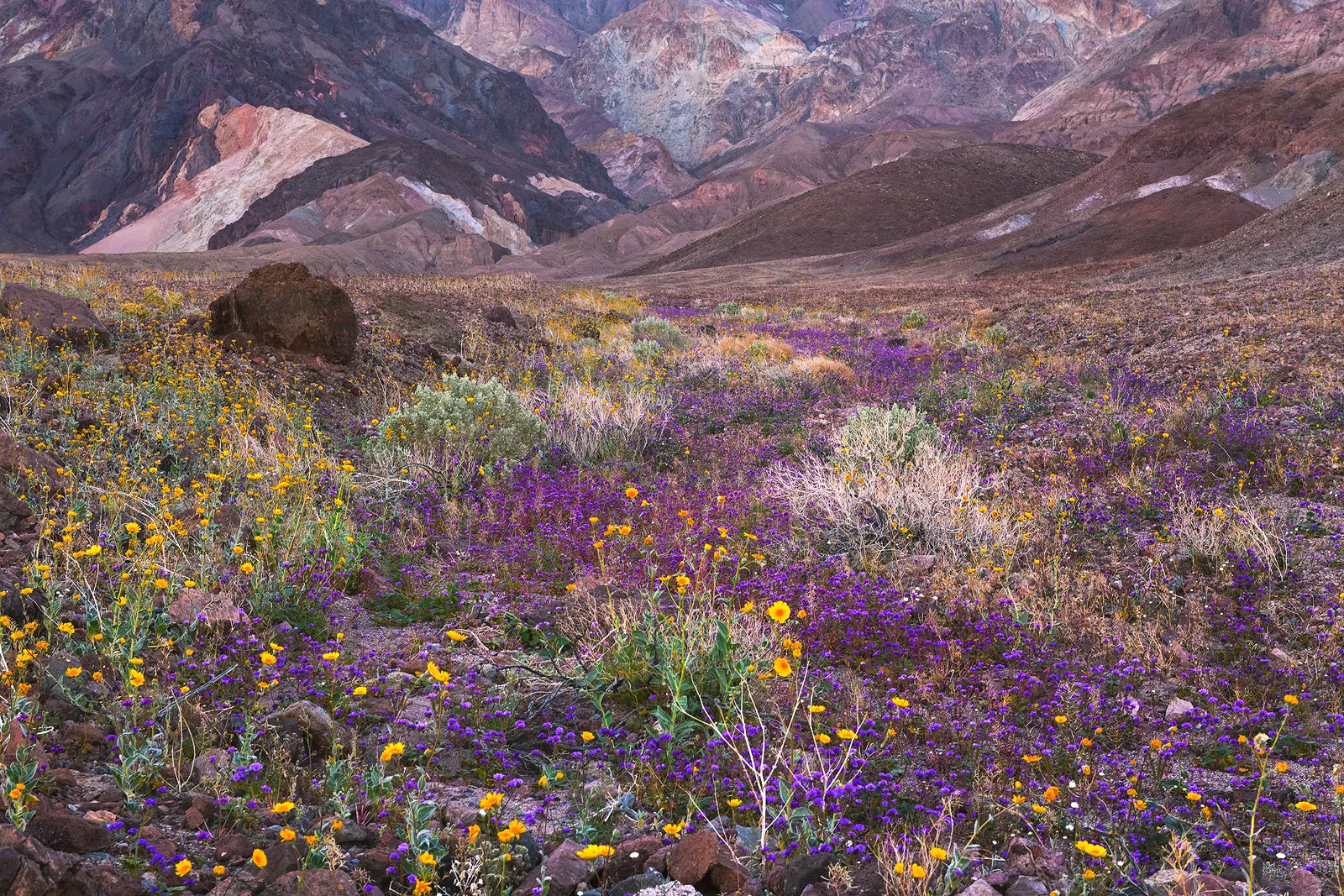
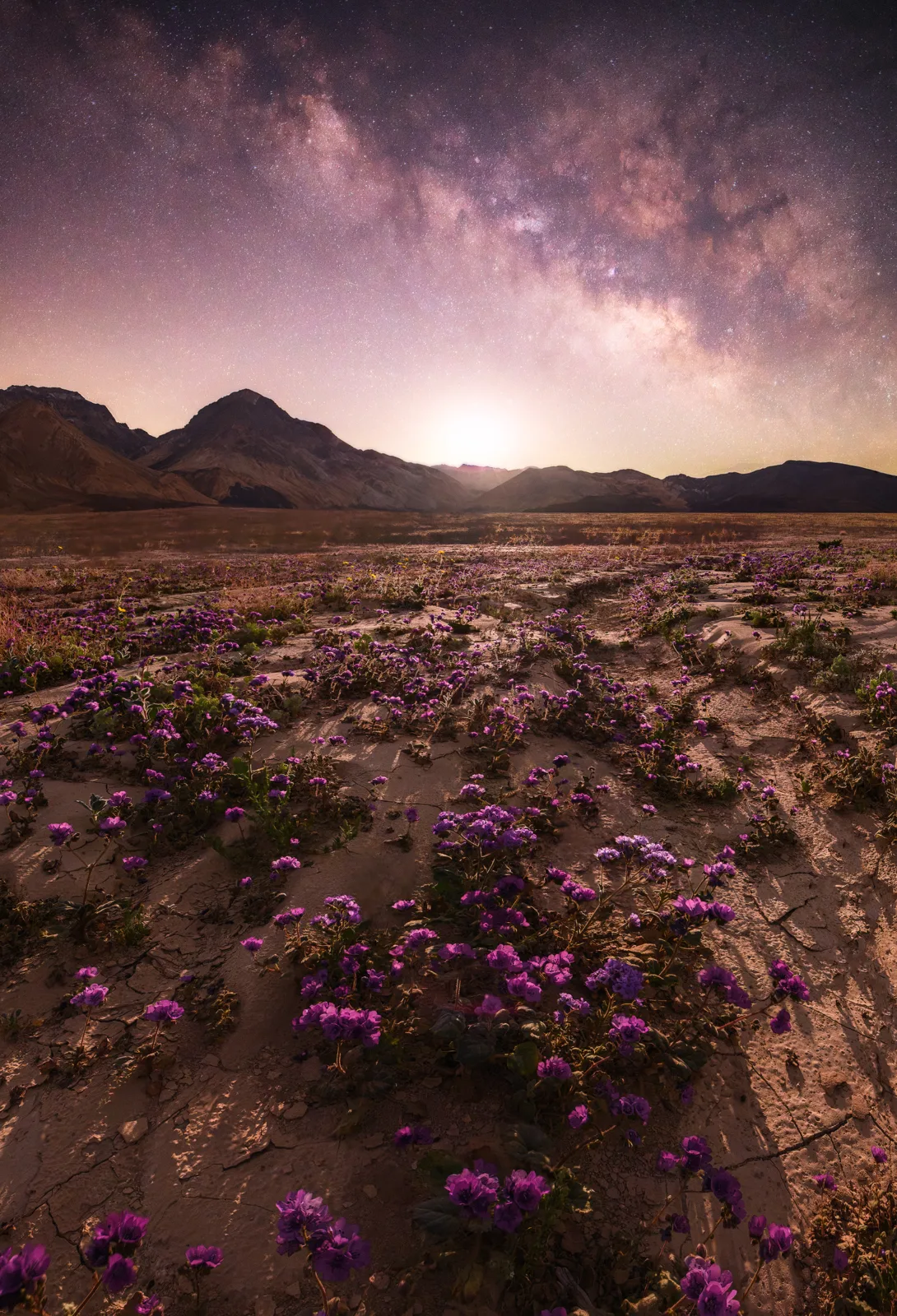
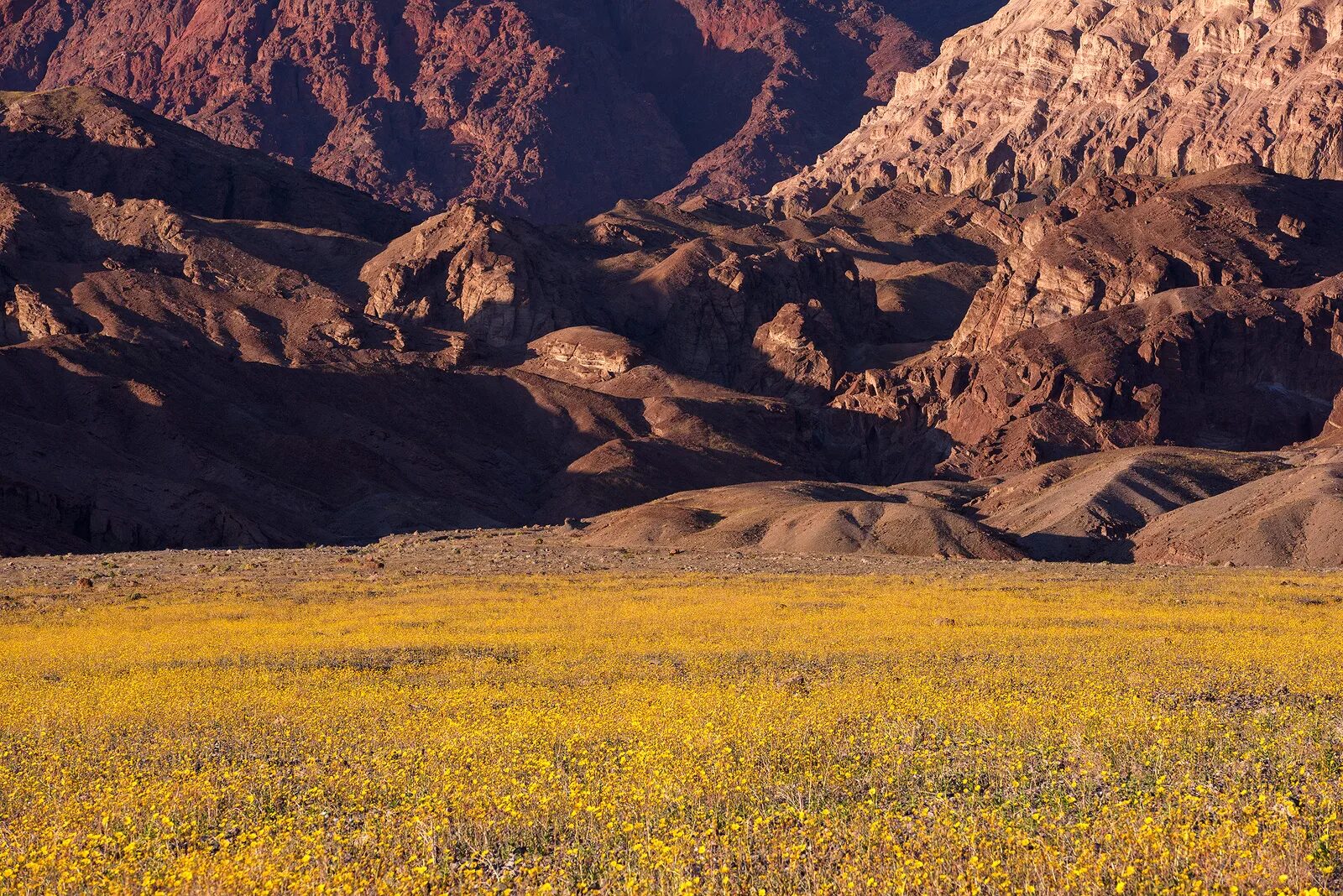
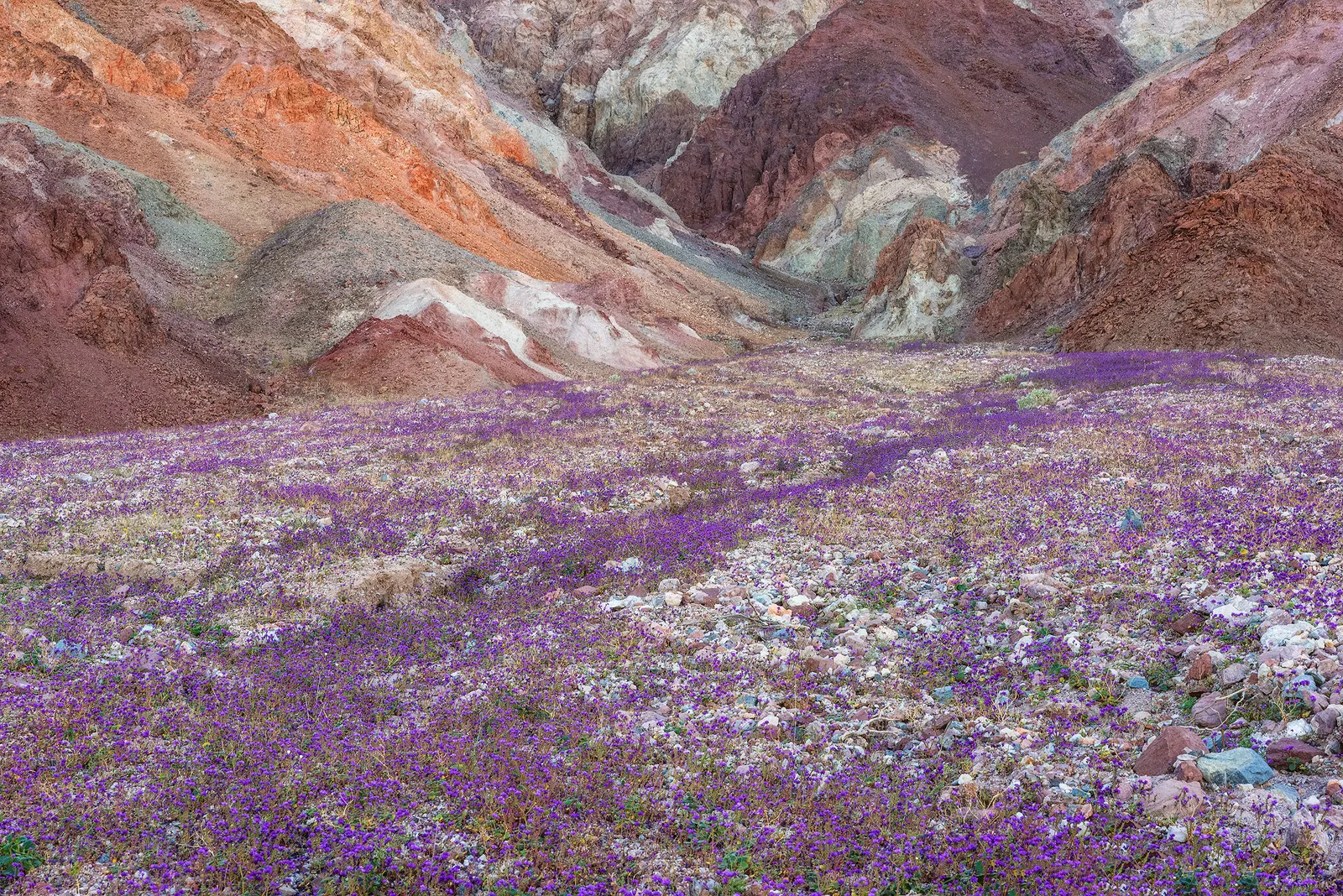
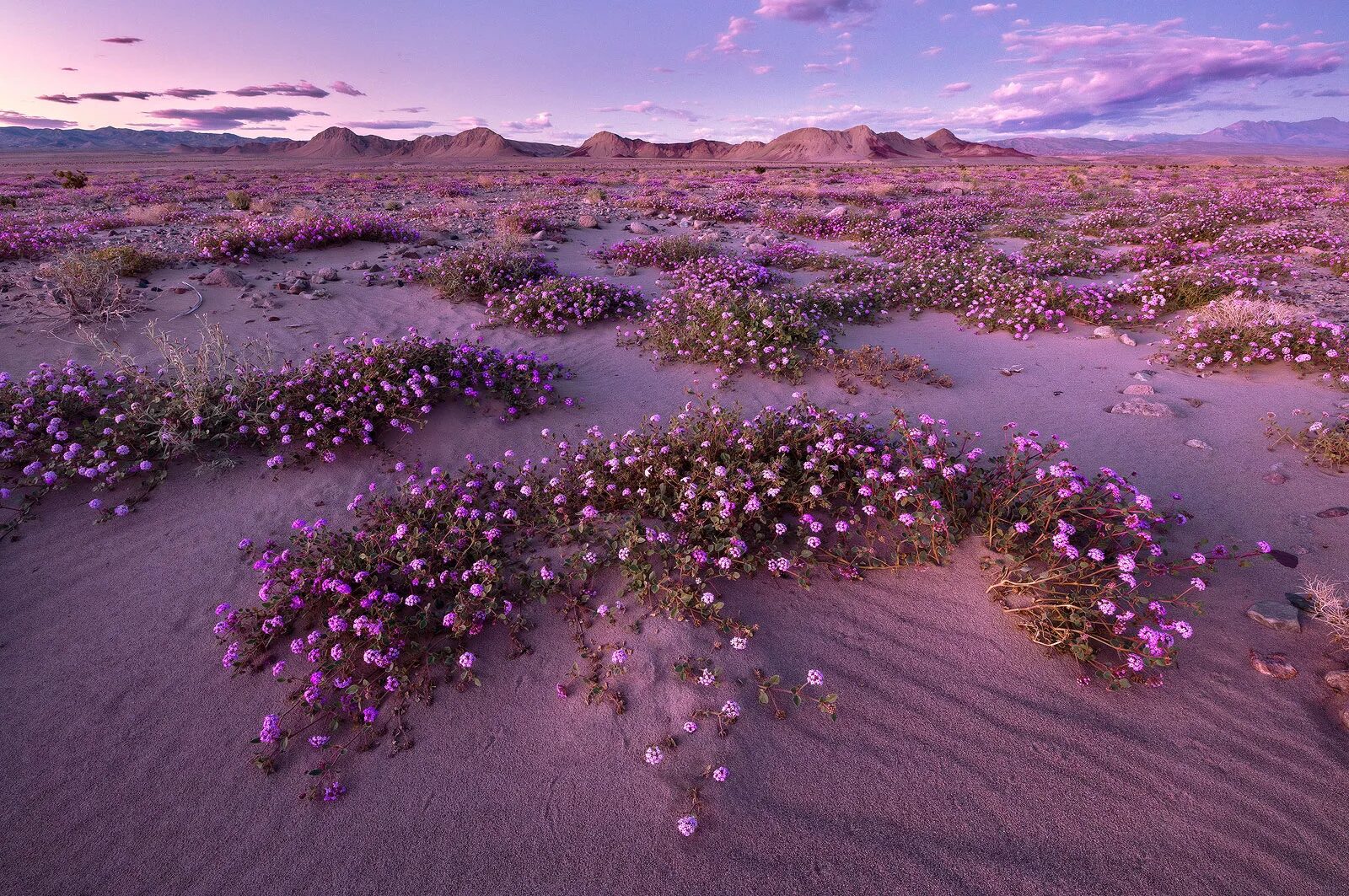
Last spring, Death Valley National Park had its first superbloom since 2016. Desert gold, sand verbena, and phacelia covered the desert floor with endless blankets of yellows, purples, and pinks across the harsh, desert landscape. Then, within a couple days in the middle of March, a historic heat wave swept across the Southwest. I was in the park teaching our Death Valley night photography workshops when it hit. I witnessed this incredible bloom that was bursting with life, day after day for two weeks, vanish in a blink of an eye.
Now, eight months later, what climate scientists are calling the strongest El Niño on record is building in the Pacific Ocean and the desert Southwest is already getting hit hard with record rainfall and flooding. Three of the last four Death Valley superblooms followed El Niño winters. So, I can’t stop wondering, “Will Death Valley have another superbloom in 2027?”
Below, I’ll do my best to cover why 2027 could be another superbloom year from a very non-scientific standpoint, when this bloom might be happening, and how to photograph the wildflowers and the night sky in Death Valley National Park.
What Is a Superbloom?
There’s no official definition of a superbloom. In my words, a superbloom is a rare phenomena when an unusually large number of desert wildflowers germinate and bloom at the same time. Therefore, superblooms can happen anywhere in the world. However, in Death Valley, which is the hottest place on Earth and driest place in North America, can actually produce some of the most incredible superblooms that stretch for miles. When you combine a superbloom in an area that is already beautiful and picturesque all on it’s own, it can create such a surreal moment in time and provide photographic opportunities that only come around a couple times in an entire decade.
According to the National Park Service, a good wildflower year in Death Valley depends on three things: “rainfall that is spaced throughout the fall, winter, and spring, enough warmth from the sun, and a lack of drying winds.” If one of these elements are missed, the flowers either never show up or, if they do, can disappear quickly. That’s why superblooms in Death Valley average roughly once in a decade. Before the superbloom in 2026, the most recent years were in 2016, 2005, and 1998.
The 2026 Death Valley Superbloom
The 2026 superbloom started months before the real bloom got underway. Death Valley experienced above-average rainfall in the fall and winter of 2025. I remember getting the itch to get out when the National Park Service actually reported wildflowers sprouting in the lower elevations in December 2025. I remember seeing images from Anza-Borrego Desert State Park experiencing a very early bloom in January and February. More rain in early 2026 turned the hillsides green throughout a lot of the southwest. By early March, Death Valley National Park was having its best bloom since 2016 and the National Park Service officially declared it a superbloom, which brought the masses to the park.
I arrived as the bloom was starting to pick up in early March and couldn’t believe how this harsh, barren landscape was beginning to transform. The entire desert floor was blanketed by endless patches of color that could be seen for miles and miles. As I explored the largest national park in the lower 48, I noticed some areas in the lower elevation had already bloomed, while others were just beginning to show off their vibrant colors.
Believe it or not, the most memorable part of this entire superbloom event, at least for me, were the fragrance and aroma from the wildflowers all around me. There is nothing quite like the scent of a million flowers hitting you all at once each time you step out of the car.
The Historic Heatwave of March 2026
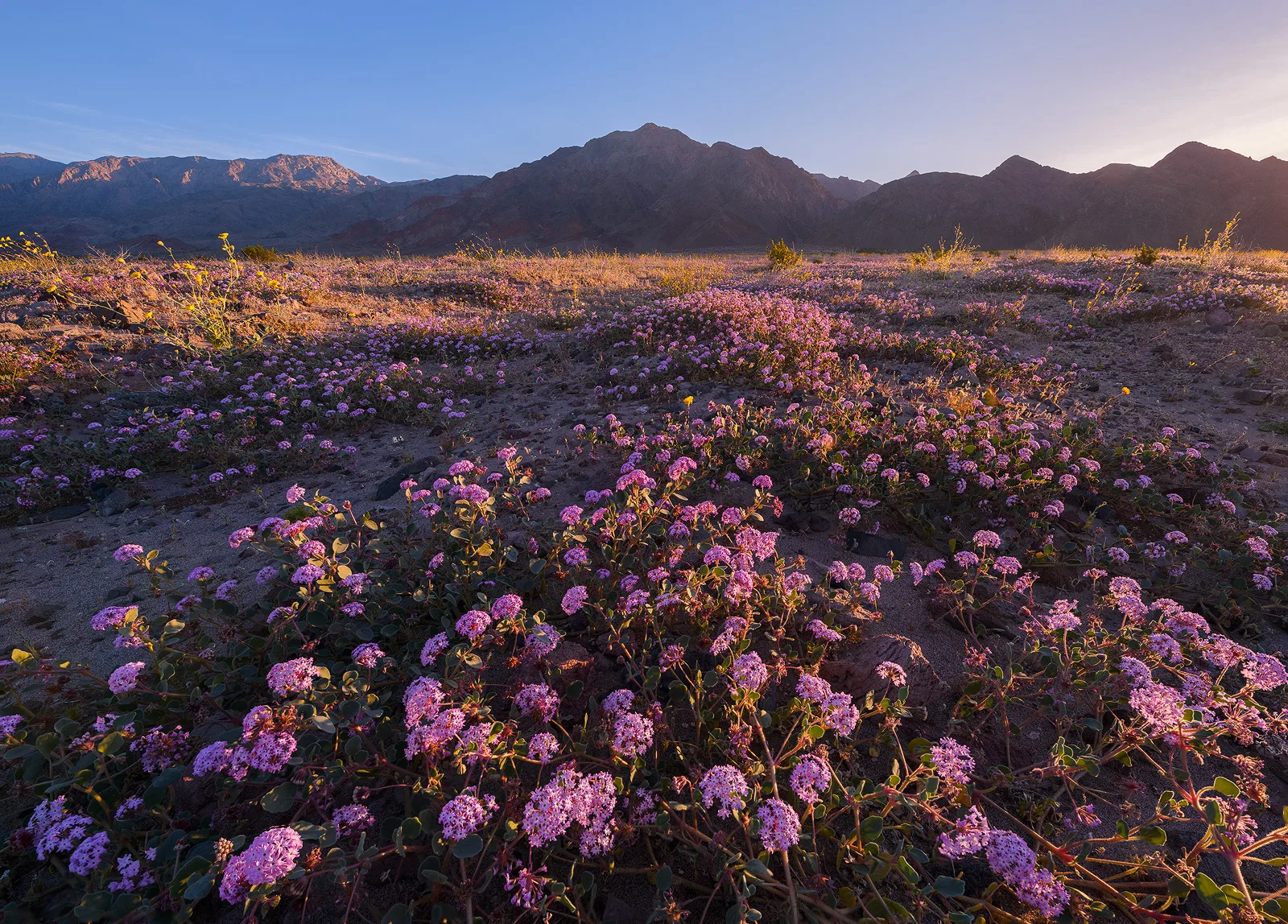
On March 20, 2026, the first official day of spring, Furnace Creek hit 105 degrees. According to the National Weather Service, it was the hottest day in March ever recorded in Death Valley National Park. Yes, you read that right. The HOTTEST day in March EVER recorded and it wouldn’t be the last.
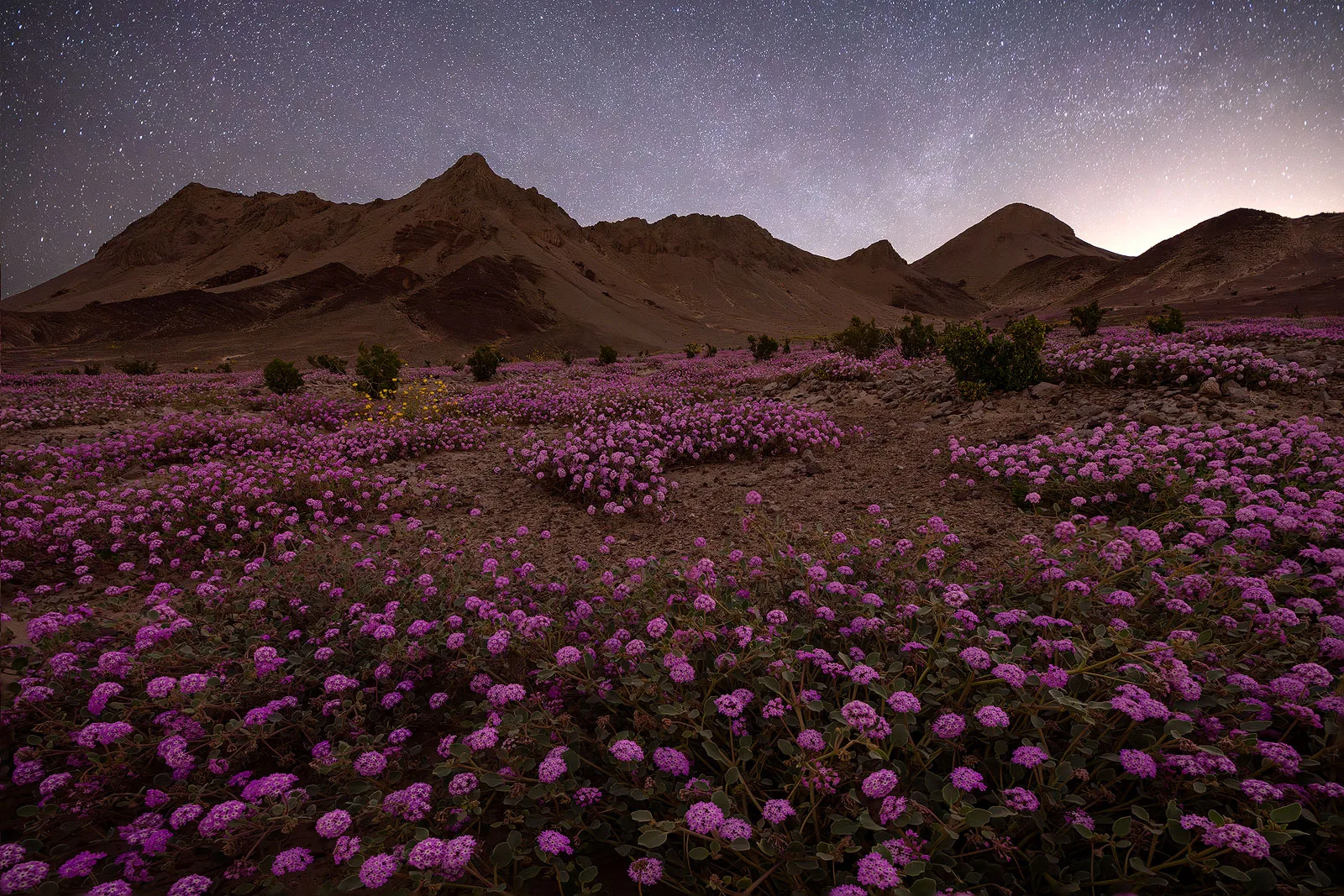
Once the heat crept into the valley, high winds were directly behind it. Flowers at lower elevations didn’t stand a chance. The forecast showed multiple days of record breaking temps and after a few days, the flowers began to wilt and started going to seed. Even the National Park Service had to call it: “Due to hot weather and high winds, many areas are now past peak.” Once my workshop began, I took my students to an area that I had spent four different nights photographing and the sand verbena were still thriving. This area took some work to reach, hiking through sand, rocks, and snake tracks were everywhere. Since the heat was so intense during the day, I modified our schedule a bit and we departed a little later than we had originally scheduled to try and avoid the extreme temps.
Thankfully, each one of my students said it was totally worth it and their images were absolutely fantastic.
Will Death Valley Have Another Superbloom in 2027?
I’m already getting questions whether Death Valley will get another superbloom next year. The honest truth: Nobody knows. Anyone who promises you a superbloom in 2027 is guessing. What I can tell you is that two superblooms have never occurred back-to-back years, however, some of the ingredients are lining up.
This winter, we have what climate scientists are calling the strongest El Niño on record. Daniel Swain, Ph.D, over at Weather West, one of my favorite climate scientists I follow for weather related anything, has been tracking the development of El Niño ever since the Pacific began showing signs of warming ocean currents. In his words, “Quite frankly, I’ve never seen anything like it before.” In his November 11 update, he wrote that many seasonal models are now producing “their wettest forecasts ever issued at seasonal scale for California,” even wetter than forecasts for the infamous 1997-98 El Niño.
The desert Southwest has already got hit hard, with large areas of southern Utah and southern Colorado receiving 400 to 800 percent of their average October precipitation, and widespread flooding in Arizona. I documented this when I was driving through the Factory Butte area and the entire desert from Moab to Escalante was flooding. Every single wash and creek bed was flowing with water.
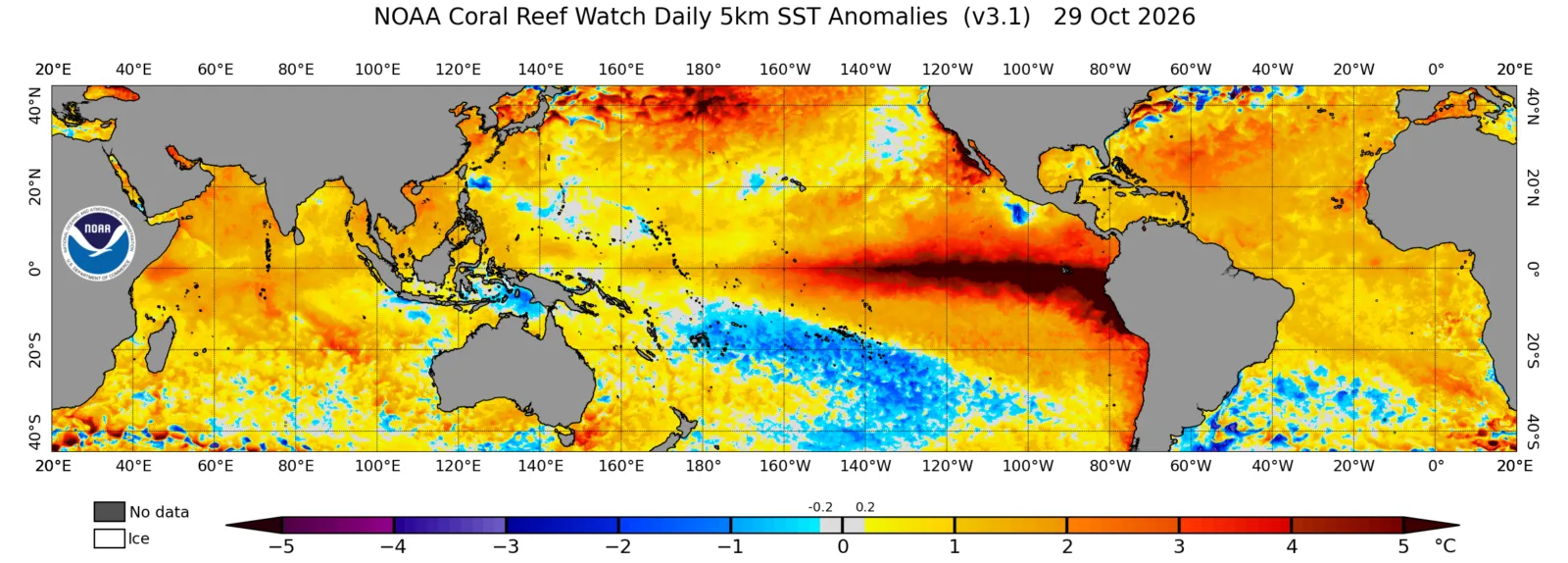
So why does El Niño matter for a desert that averages just over two inches of rain a year? According to NOAA, the link between El Niño and above-average precipitation in California and the Southwest depends on its strength: the stronger the El Niño, the stronger likelihood of above-average precipitation. Timing matters too. About 76 percent of Death Valley’s annual precipitation falls between November and April, which is when El Niño typically ramps up with significant moisture and atmospheric rivers.
According to the National Park Service, it takes a rainstorm of a half inch or more to wash the protective coating off wildflower seeds so they can sprout. The best blooms are triggered by an early, winter-type rainstorm in September or October, followed by an El Niño weather pattern that brings above average rainfall to the Desert Southwest.
So how does this fall compare to last year? According to the National Park Service, fall of 2025 was the wettest fall on record with 2.41 inches of rain from September through November. November alone measured 1.76 inches, breaking a record set in 1923. In their words, “These fall storms brought more rain than Death Valley typically receives in an entire year.”
This fall, the National Weather Service rain gauge at the Furnace Creek Visitor Center has recorded 1.23 inches since October 1, 2026, according to preliminary National Weather Service data. Even with this rain, it’s still going to be anybody’s guess. What I can tell you is that the elements are lining up and there is currently a chance.

When Is the Best Time to Photograph the Death Valley Superbloom?
The National Park Service lists peak bloom at lower elevations from mid-February through early April. In 2026, the low-elevation bloom peaked in early March, well before the heat wave cut it short. In fact, when I arrived in early March, some of my favorite annuals I’ve photographed time and time again had already come and gone. That was a bit of a surprise to me because this was the first year they had come so early. Of course, every single year I say this more and more about every location I visit in the lower 48. Times are changing.
Both of our 2027 Death Valley night photography workshops run in March, right in the middle of that peak window: March 6 to 12 and March 14 to 18, 2027. If the wildflowers show up, we’ll be there! If they don’t, March is still one of the best months of the year for night photography in Death Valley.
How to Photograph the Death Valley Superbloom at Night
Photographing wildflowers under the stars takes planning and patience. Here are a few of the techniques I come back to again and again, and the same we’ll work on together in the field.
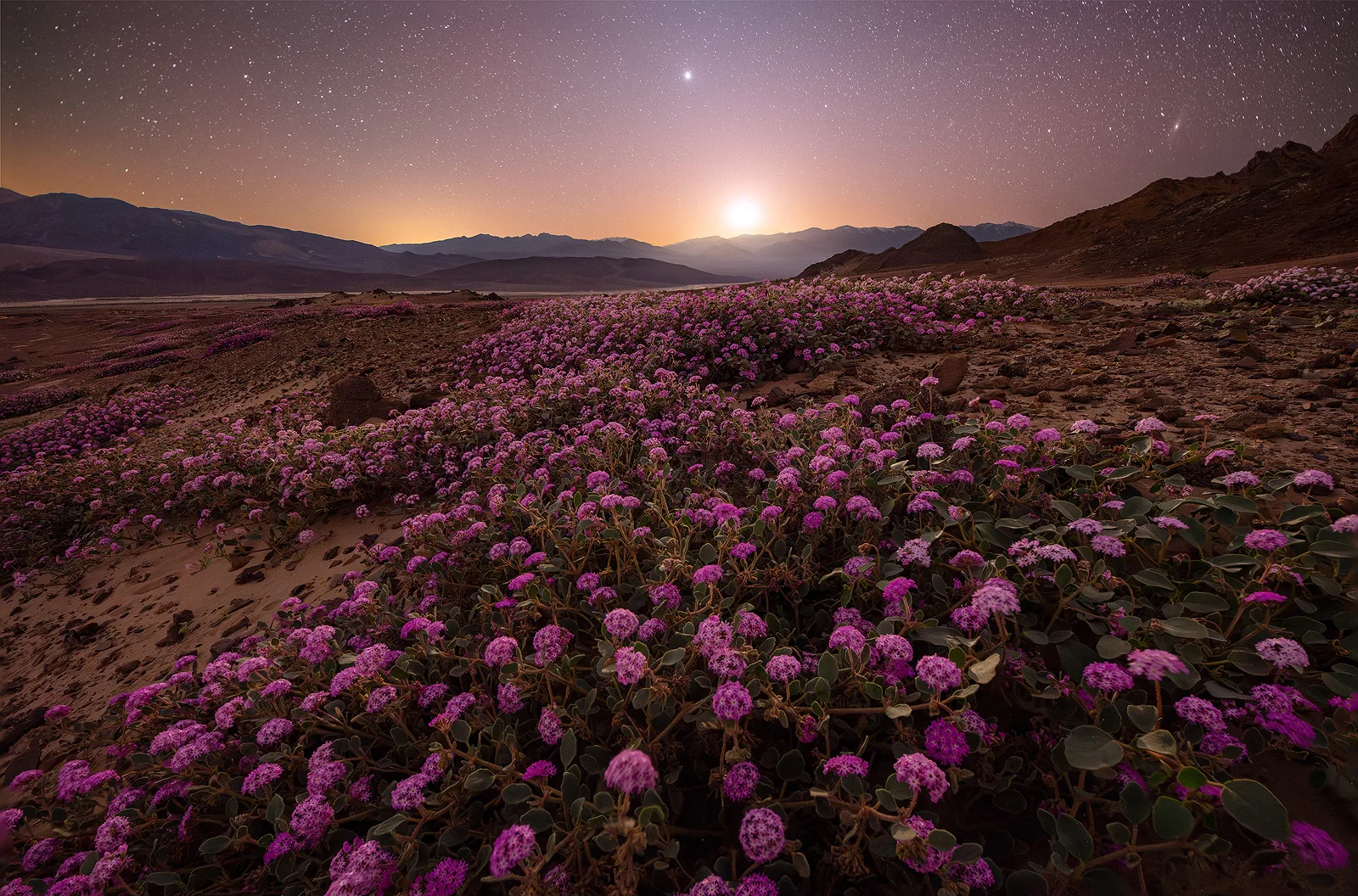
Prioritize the landscape. In a superbloom, the flowers are your foreground, so give them room. Aim for 2/3 foreground and only 1/3 sky. I promise, this will challenge you, but it will be the most rewarding.
Compose with a high ISO. Stop using 30 second exposures to test your composition. Crank the ISO to something absurd, 25600 is a great starting point, and you should only need 5 to 10 seconds of exposure to see your scene if you don’t have moonlight. If your camera has ‘Bright Monitoring’ like my Sony a1 II, that will save you a lot of time composing at night.
Start with these settings. Without moonlight, 20 seconds at f/2.8 and ISO 6400 is a good starting point with a wide-angle lens.
Give the flowers more time and less ISO. When you only expose for the stars, the landscape (and every flower in it) generally is underexposed and disappears. I shoot longer exposures for the foreground and shorter exposures for the stars, then blend them in post-processing. Just remember: shadows without data cannot be recovered.
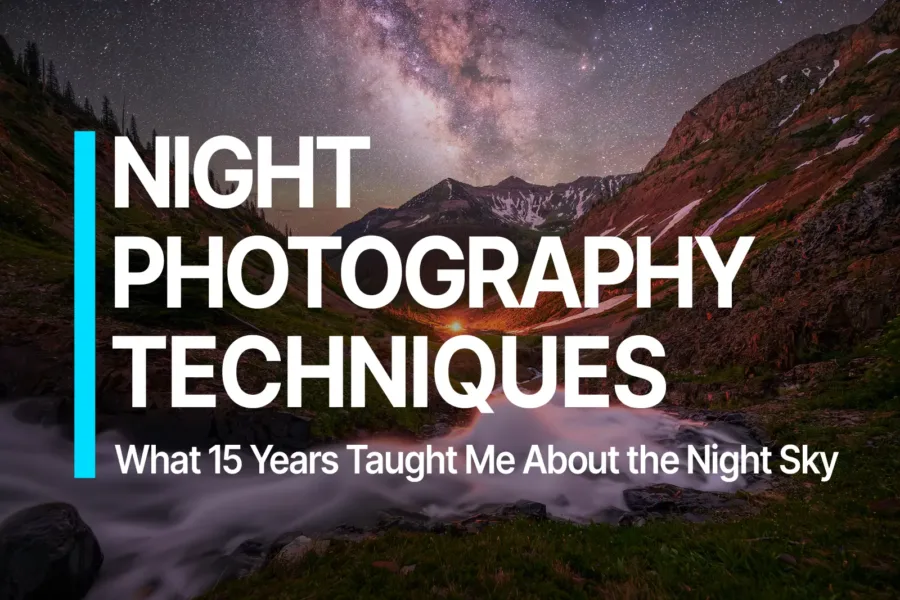
For a deeper dive, check out my night photography techniques article.
Join Us in Death Valley in 2027
So, will the flowers come back? The ingredients are building, but only time will tell. But here’s the thing: there is so much more to Death Valley than flowers. Our workshops are in March and gives you a chance to photograph the winter side Milky Way, Zodiacal light, and the Galactic Center of the Milky Way, all in a single night! We’ll have the darkest skies of the month and Zodiacal Light, that faint glow rising off the western horizon after twilight, is the best time to photograph it around the spring equinox. Our second workshop, is timed so we can photograph the moon setting over the landscape each night, then shoot the Milky Way once the skies go dark. Flowers or not, there are endless possibilities there.
See dates and availability for our Death Valley night photography workshops →